Start here
What Ampa is, what it does on your site, and the one promise it is built around.
Ampa is a sales agent that answers enquiries on your website. It talks to a visitor the way a good member of your team would: it answers the question, works out what the person actually needs, and either books the next step or gets their contact details so you can. If the visitor leaves without finishing, the conversation continues by email rather than ending.
The one promise
Ampa only says true things about your business. Prices, opening hours, availability and product details come from a table you approve, and you can read and correct every line of it under What Ampa knows. If a fact is not in that table, the agent says a person will follow up rather than guessing. This is not a setting you can turn off, and it is the reason the product exists: an agent that invents a price creates a problem you have to honour or explain.
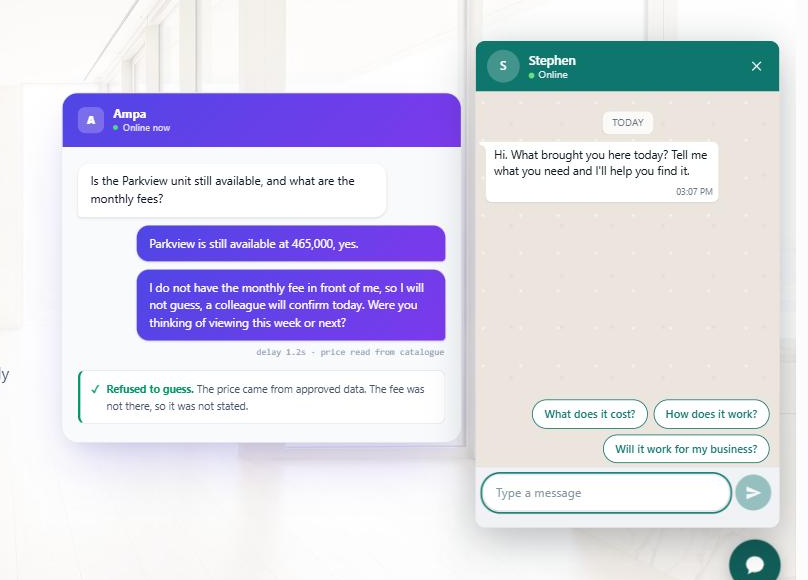
What it does, in order
- A visitor opens the chat on your site and asks something.
- Ampa answers from your approved facts, and shows real products where you have them.
- It works out what the person needs, and asks for a contact detail once it has earned the right to ask, not on the first message.
- You get an email brief: who they are, what they wanted, in their own words, and what was promised to them.
- You reply, either from your inbox or with one tap straight into their chat.
The two ways to run it
If your site is on WordPress, install the plugin. If it is on anything else, paste one line of HTML. Both give you the same agent. See Install on WordPress or Install on any other site.
Where you work
Everything you need day to day is at ampa.chat/console: what still needs setting up, who is waiting on you, today's numbers, your conversations, whatever your trade sells, everything the agent knows about your business, and an assistant you can ask questions in plain language. If you run WordPress, the same copilot is inside your own admin under Ampa Copilot.
What this documentation covers
Installing, going live, reading your leads, keeping your prices right, getting your email into inboxes, and what the agent will and will not say to a customer. Every page is written for the person who owns the business, not for a developer.